
Is Water Damage Permanent? The Thresholds That Decide
Most water damage is reversible for a while, then it is not. The dividing line is time, not severity.

Almost all water damage is reversible for a period, and then it stops being reversible. The thing that moves it across that line is usually not how dramatic the leak looked — it is how many hours the material stayed wet, and what the material was.
This is the question people actually mean when they ask whether damage is permanent: is it too late, and will drying work, or am I paying to replace this. Below are the thresholds that decide it, material by material, and the signs that tell you which side of the line you are on.
The clock matters more than the volume
A hundred gallons removed within an hour frequently causes less permanent damage than ten gallons that nobody noticed for a week. Water does its lasting harm by sitting — soaking deeper into porous material, breaking adhesive bonds, swelling wood fibres and giving microbial growth the conditions it needs.
That is why the useful questions on a first call are when it started and how long it ran, not how much came out. A homeowner who can say "it started at about nine last night" has given us the single most predictive piece of information available.
What recovers, and what does not
Material behaviour is consistent enough to be tabulated. The variable in every row is time.
| Material | Usually recovers if | Usually replaced when |
|---|---|---|
| Solid timber framing | Dried before sustained saturation; readings return to control | Rot, delamination or sustained readings after a full drying cycle |
| Drywall | Clean water, dried within about 48 hours, cavity dried too | Swelling, crumbling, loss of paper bond, or any Category 3 contact |
| Insulation (batt or blown-in) | Rarely — briefly damp batt occasionally | Almost always. Saturated insulation does not recover its R-value |
| Carpet | Clean water, extracted quickly, pad often replaced | Grey or black water, delamination, or more than about 48 hours wet |
| Carpet pad | Seldom worth saving | Almost always replaced — it holds water and is cheap |
| Concrete slab | Nearly always recovers | Effectively never replaced; it just needs longer to dry |
Cosmetic, structural, and the gap between them
A stain is not damage. Discoloration on a ceiling can be a cosmetic record of something that dried out perfectly well months ago, and painting over it is a legitimate answer once the cavity reads dry.
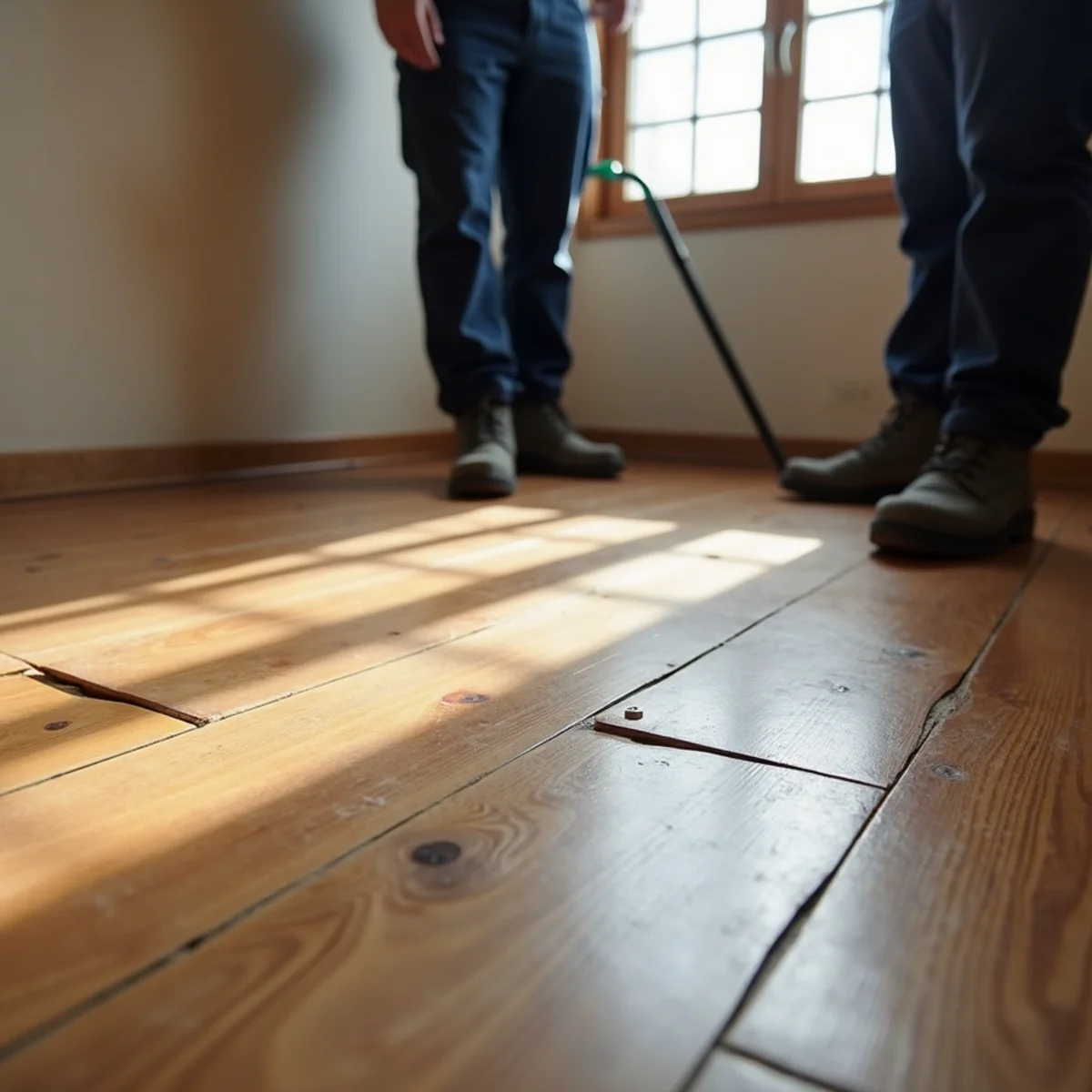
What is not cosmetic: material that has changed shape or lost strength. Buckled flooring, a ceiling that sags under light pressure, drywall whose paper face separates when touched, or framing that reads wet after a complete drying cycle. Those are replacement conversations.
The confusing middle case is a dry surface over a wet cavity. Drywall dries from the face first, so a wall can read dry at the surface while insulation and framing behind it are still saturated. That is the single most common reason damage people believed was resolved turns into a mold job a month later.
How to tell which side of the line you are on
- Press it. Material that gives, crumbles or sounds hollow has lost structural integrity and will not come back.
- Smell it. A persistent musty odour means something is still damp or already growing, regardless of what the surface looks like.
- Look along the plane. Sight down a floor or ceiling from a low angle — cupping, crowning and sag are obvious from the side and invisible head-on.
- Meter it, do not guess. A moisture meter reading compared against an unaffected area of the same material in the same building is the only non-destructive answer that means anything.
- Check the date. If you know the water ran for more than three days, assume replacement for porous materials until a reading proves otherwise.
Damage that was never properly dried is a different problem
A large share of what we are called to look at is not a new loss at all. It is a leak from six months ago that was mopped up, aired out with a box fan, and declared finished — and the owner is now dealing with a smell, a stain that keeps coming back, or growth at a wall base.
In those cases the damage is frequently permanent in the materials, but the situation is still entirely fixable: find and stop the moisture source, remove what has gone, dry what remains to a measured standard, and rebuild. The outcome is good. It simply costs more than it would have in the first 24 hours, which is the whole argument for calling early.
Frequently asked
How long does water damage take to become permanent?
There is no single hour at which it flips, but the practical thresholds are consistent. Under 24 hours, clean-water damage to most materials is fully recoverable. Between 24 and 48 hours, microbial growth becomes likely and porous materials start crossing over. Past 72 hours you are generally replacing rather than drying, and the water itself has usually degraded a category as it picked up soil and contaminants.
Can old water damage still be fixed?
The affected materials often cannot be restored, but the situation almost always can. Old damage is handled by finding and stopping the moisture source, removing material that has deteriorated or grown, drying the rest to a measured standard, and rebuilding. What you lose by waiting is scope and money, not the possibility of a good outcome.
Does a water stain mean permanent damage?
Not on its own. A stain is a record that water was there, not proof that anything is still wrong. If a moisture meter reads normal against a control area in the same room and the material has not changed shape, a stain is a painting job. What matters is whether the assembly behind it is dry and whether the source was fixed.
Is drywall ruined once it gets wet?
No, not automatically. Drywall wetted by clean water and dried within roughly 48 hours — including the cavity behind it — is usually fine. It is finished when it has swelled, crumbled or lost its paper bond, and it comes out regardless of appearance when the water was contaminated, because Category 3 water penetrates the full thickness and cannot be reliably disinfected in place.
The bottom line
If you are asking whether your damage is permanent, the most useful next step is a moisture reading rather than another week of looking at it. The reading either tells you the assembly is dry and you have a cosmetic repair, or it tells you something is still wet and the clock is still running.
We will take those readings and tell you honestly which it is — including the times the answer is that you do not need us.